

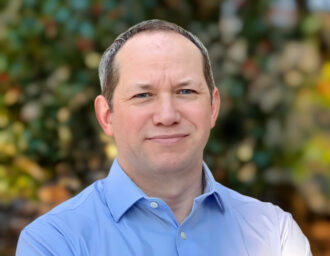
Alistair Rogers is a plant physiologist who led Berkeley Lab’s Climate and Ecosystem Sciences Division, before stepping into the role of interim associate laboratory director for EESA in 2026. He is a leading authority on how plants respond to elevated levels of atmospheric carbon dioxide and on how Earth System Models represent photosynthesis. Rogers earned a Ph.D. in Biology from the University of Essex in the UK before beginning his career at Brookhaven National Laboratory in 1998, where he stayed until joining Berkeley Lab in 2024.
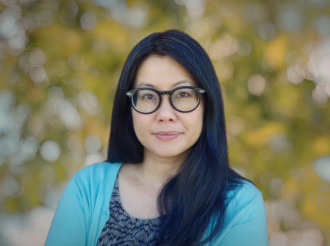
As Interim Area Deputy for Operations, Sandy Chin partners with EESA’s Associate Lab Director and Division leaders to provide strategic and operational leadership in support of the Area’s research enterprise. She brings deep experience managing large multi-institutional, multidisciplinary scientific enterprises, stewarding through organizational change, and aligning people, processes, and systems to enhance impact. Informed by her training in anthropology at Rice University and UC Berkeley, she cultivates a collaborative, inclusive culture across the teams she builds. Sandy is also dedicated to expanding the STEM pipeline, having launched multiple programs in partnership with the A-LIFT office, Cal State East Bay, and DOE Nuclear Energy.
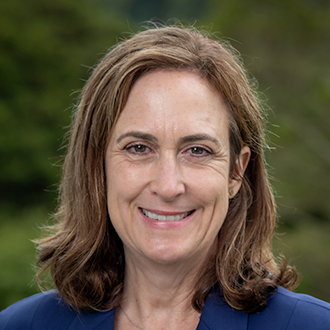
In her role as Strategic Communications Lead for EESA, Christina directs communications and outreach efforts that convey EESA's complex research on climate science, energy, and water to broad audiences and diverse stakeholders. Christina collaborates with EESA leadership, science staff, and various partners to translate EESA’s expertise into compelling narratives and visual content for government and partner relations, media outreach, and social media. She previously worked for Newsweek, reporting on science and the environment, and for the University of Texas at Austin where she established and led content initiatives for programs tied to conserving native landscapes for environmental resilience.
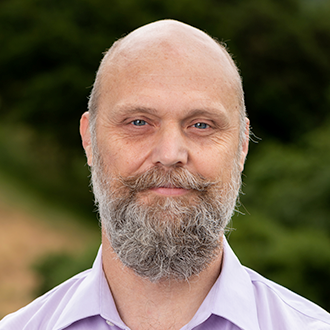
Peter Nico is the division director of the Energy Geosciences Division. His research emphasizes the role of mineral surfaces and redox active metals such as Fe and Mn. Much of the work uses synchrotron-based X-ray spectromicroscopy techniques to probe chemical and physical heterogeneity on the micron and nanometer scale. He received a PhD in agricultural and environmental chemistry, from the Davis campus, and a master's in organic chemistry from the University of California Los Angeles. He maintains a visiting scholar appointment at Stanford University, where he was a postdoctoral fellow in soil and environmental biogeochemistry.
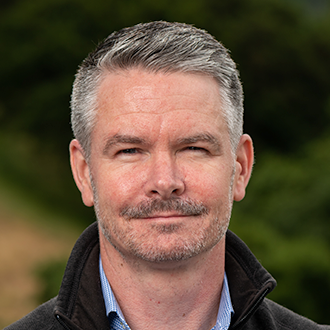
Eoin Brodie is the interim director of the Climate and Ecosystem Sciences Division. His own research is broadly focused on reverse-engineering complex microbiomes in natural and managed ecosystems, and using computational models to explore microbiome functioning, with the goal of harnessing microbiomes to support healthy soils and resilient ecosystems and organisms. He earned a PhD in microbial ecology from University College in Dublin, Ireland, before completing postdoctoral positions and leadership training at the University of California, Berkeley, and Berkeley Lab.