
Scientists at the Earth and Environmental Sciences Area are leading research into the critical minerals and rare earth elements essential to domestic energy production and a reliable supply chain for the technologies driving our energy future. They bring deep understanding of geology, geochemistry, and geophysics — paired with expertise spanning scales from the atomic to the industrial — to advance knowledge that informs the development of technologies that are both highly selective and capable of scaling rapidly to meet surging demand for critical minerals and rare earth elements.
The team’s vast computational expertise in subsurface processes provides the foundation needed to generate the insights that drive truly specialized and selective tools — ones capable of precisely identifying, extracting, and processing target minerals in ways that broad-based approaches cannot achieve.
Basic Science for Supply Chain Security
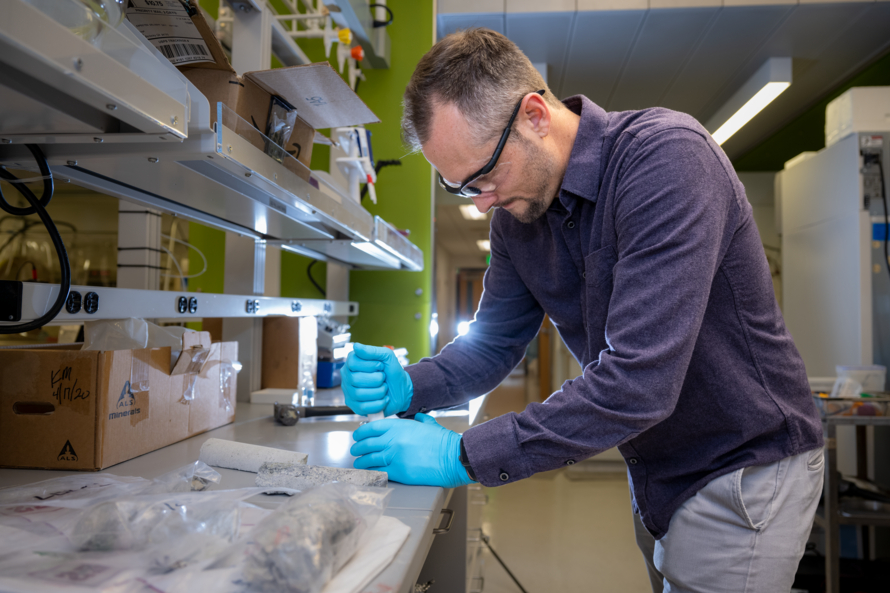
The U.S. imports 80% of its critical minerals, with materials like titanium and gallium sourced entirely from foreign suppliers — leaving aerospace, defense, and advanced electronics industries exposed to supply chain disruptions. Drawing on expertise in materials science, geoscience, and computational methods, our team is generating the basic science insights needed to develop technologies precise and efficient enough to expand our nation’s domestic supply chain. This includes understanding how critical elements behave chemically in complex mixtures to enable new separation approaches and alternative materials. EESA researchers also lead Berkeley Lab’s contributions to DOE’s METALLIC, a nine-laboratory initiative to accelerate new critical mineral and material supply chains.
AI and Advanced Computing for Mineral Recovery

AI and machine learning play a key role in characterizing and processing the critical minerals and rare earth elements needed for energy technologies, defense systems, and modern infrastructure. EESA scientists are developing AI-enabled sensors, autonomous labs, and large language models to reveal the processes shaping mineral systems. Machine learning predicts the thousands of possible chemical pathways these minerals may undergo under varying conditions, while autonomous laboratories test and refine those predictions at unprecedented speed and scale — delivering the specificity and selectivity essential to exploring minerals that rarely occur in isolation. Researchers have also created aerial and ground-based mapping tools to identify hot zones of critical mineral concentrations, and AI programs to improve extraction from coal tailings.
Unlocking Minerals from New Sources
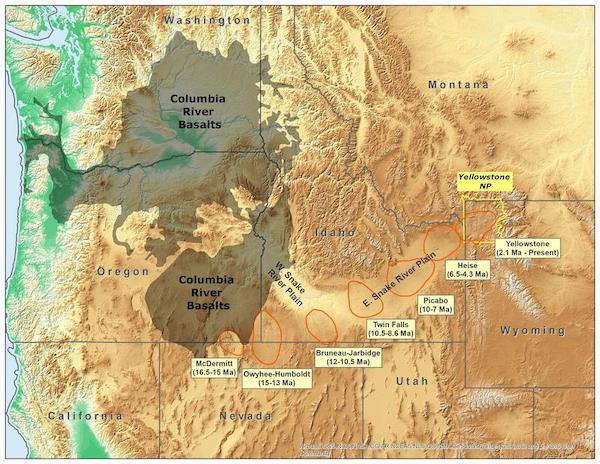
The U.S. remains heavily reliant on lithium imports despite hosting the world’s largest known lithium deposits within Oregon’s McDermitt Caldera — resources that have not been exploited due to gaps in geological knowledge and the absence of viable extraction technologies. The U.S. remains heavily reliant on lithium imports despite hosting the world’s largest known lithium deposits within Oregon’s McDermitt Caldera — resources left unexploited due to decades of stagnation driven by gaps in geological knowledge and the absence of viable extraction technologies. As one example of how EESA researchers advance technologies that unlock minerals from unconventional sources, they are leading efforts to tap these deposits by leveraging the unique characteristics of their clay-like mudrocks to separate lithium using less water, energy, and chemicals than conventional hardrock methods. Two projects — ELM and PRISM — are focused on the McDermitt Caldera, targeting the precise location of lithium within the deposits, identifying co-located valuable materials, and building a blueprint for commercial-scale, low-waste, end-to-end lithium extraction.
Advancing Mineral Recovery from Geothermal Brines
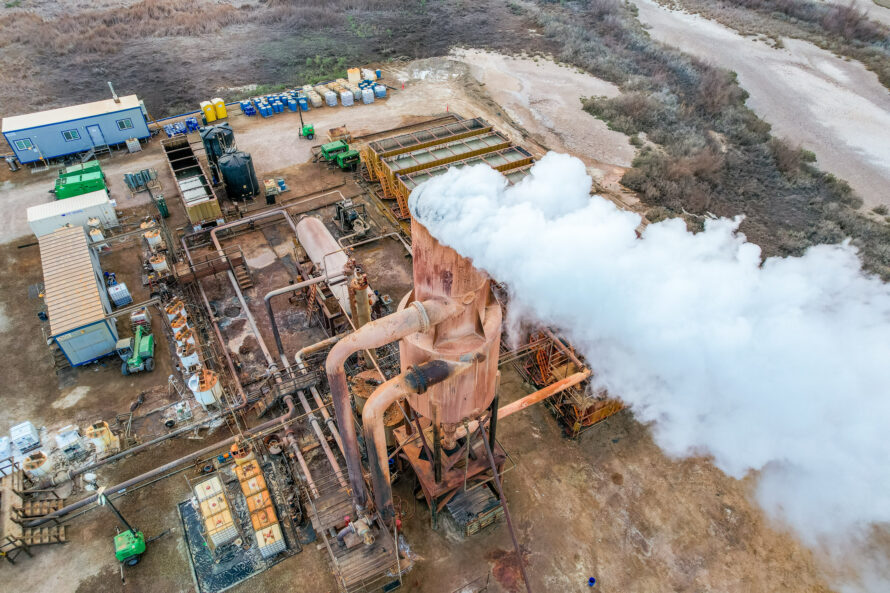
Geothermal brines — a byproduct of geothermal electricity generation — can contain high concentrations of valuable minerals such as lithium, zinc, and magnesium, yet have historically been re-injected underground because effective separation methods have not been well understood. Berkeley Lab scientists are leading efforts to change this, focusing on two distinct geological settings: the superhot, ultra-deep zones beneath California’s Salton Sea, and the Smackover Formation, a limestone aquifer stretching from western Texas to northern Florida. Each site offers unique insights into how mineral-rich brines form and how their resources might be recovered. Researchers previously characterized the geothermal lithium resource at the Salton Sea and continue to analyze extraction techniques and study lithium cycling within the Smackover Formation.